Expert advice, market reports, and tips from the Niagara Region real estate professionals.
I hope this newsletter finds you all in good health and high spirits. Today, we are excited to shed light on an important topic that often pops up when dealing with condominium transactions in Ontario: the Condo Status Certificate. As you may already know, the role of a lawyer is crucial when it comes to interpreting and reviewing the contents of this document. In this newsletter, we will explore what a lawyer in Ontario typically reviews in a condo status certificate to facilitate informed decision-making for their clients.

In 2020, Ontario saw a sharp decline of 36% in the number of married couples. This is due largely to individuals who choose to carry on as a “common law” couple. This choice is most popular among couples 65 and older, most of whom were previously divorced and do not want to remarry. Notwithstanding the increased occurrence of common law couples, there is no legislation in Ontario that automatically protects an unmarried partner in dividing property when there is death or separation.
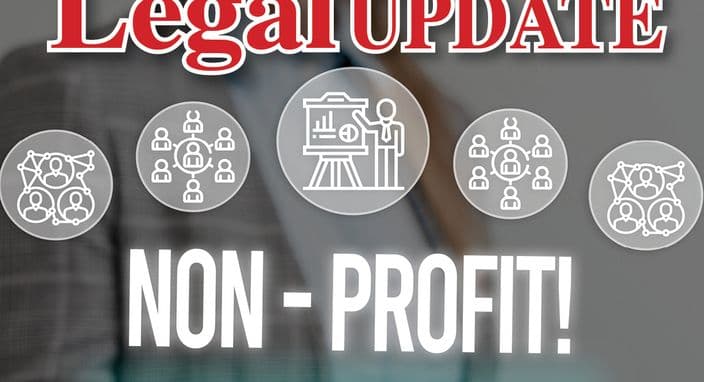
The Not-for-Profit Corporations Act, 2010 (ONCA) in Ontario, Canada, has recently undergone updates to streamline processes, increase accountability, and strengthen governance within not-for-profit corporations. The amendments bring significant changes, such as simplifying the incorporation process, allowing for profit from commercial activities, providing options for financial reviews, and enhancing members' rights. This article aims to summarize these key changes and their implications for not-for-profit organizations.
When it comes to buying or selling a house, both parties want to ensure that the transaction is completed successfully. To help ensure the process runs smoothly, the use of a lawyer's trust account is relied upon. Understanding how escrow works is an essential feature of real estate in Ontario.

When considering starting a business and incorporating there are several advantages to Virtual Minute Books. Under the Ontario Business Corporation Act R.S.O 1990 it is required that corporations maintain accurate records. Minute Books contain a record of a company's resolutions, Shareholder Registers, Director Registers, Officer Registers, Shareholder Agreements, Forms Filed and other valuable documents.
In my last article, we discussed why you would want to make a will. In this article, we review the legal process for obtaining authority to handle an Estate. We also consider why it is important to your family and heirs that you prepare a will during your lifetime, even if you do not feel you have a lot of assets.

When deciding to incorporate, it is essential to understand what is involved in the maintenance of your corporate records and filing obligations. Failing to file necessary documents can prevent you from obtaining ministry accounts, and could result in the involuntary dissolution and or fining of your corporation for non-compliance. This article reviews corporate minute books and discusses ways you can stay organized to ensure optimal performance for your corporation.

Suppose you have inherited a house worth one million dollars in fair market value. You might be concerned about what taxes are involved. This article will cover the possible estate tax outcomes, including a review of the situations where no estate tax is payable by you!
This recent bill before the Legislature will be of particular interest for anyone watching the housing market. Bill 23, More Homes Built Faster Act, 2022 was introduced by Minister of Municipal Affairs and Housing the Honourable MPP for Leeds-Grenville-Thousand Islands and Rideau Lakes Steve Clark (PC) on October 25th, 2022 and passed the first reading. At the time of writing, it remains under review by the Standing Committee on Heritage, Infrastructure, and Cultural Policy for its second reading. The bill serves as a streamlining tool, targeting zoning, heritage designations, and environmental protections.
Renovations and land development is expensive. There is no end to the surprises that could add great cost to your project. No one anticipates uncovering a burial plot when putting in a pool, expanding a driveway, building a deck, or adding a garage to their property. In Ontario, under the Funeral, Burial and Cremation Services Act, 2002 homeowners are required to immediately notify the coroner or police of any human remains discovered on their property.

Traditionally in Ontario, a change in one’s marital status would revoke their will. A will made by a single person was revoked upon marriage, a will made by a married couple was revoked upon divorce – only divorce, legal separation was insufficient.