Expert advice, market reports, and tips from the Niagara Region real estate professionals.

If there were one and only one principal and practice that I could instill into the hearts and minds of real estate investors, it would be this. Learn to delegate. In fact in my Money Machine Seminars I tell attendees “if you are a plumber for example and have rental properties, when you get a call from a tenant complaining about a tap dripping call a plumber, don’t be the plumber.” Most people don’t get this. They don’t follow that bit of advice. And that fact, more than anything else, is what causes investors to throw in the towel and give up on being a landlord.

In our last article on the Money Machine appearing in April’s Market Trends Newsletter, we began a series of Best Practices designed to help you manage your real estate investment portfolio successfully. The goal as always is to reach the finish line with a number of investment properties (at least 10) fully paid for, and provide you with an abundant cash flow into retirement.
In the last issue of our Market Trends newsletter under The Money Machine, we looked at four forces at work that could derail your plans to build an investment portfolio. And we talked about ways you could protect yourself from that happening.
There are a lot of instructional sources these days for investing in real estate. Some are encouraging the participation in a particular project. Others are claiming to show you how to spot opportunities in the marketplace where you can buy below market value. Still others want to show you how to ‘fix and flip’.

Last month we took a look at expenditures you might make on your investment properties in the way of repair, maintenance and upgrades, and we saw that those costs could be handled in one of two ways, depending on the nature of the work done. They could either be expensed or they could be capitalized. Expensed, we saw resulted in a dollar-for-dollar deduction against income, while capitalized items would add to the capital cost of the property. And that capital cost, could if you so chose, be depreciated over time. Today I’d like to look at that whole issue of depreciation.
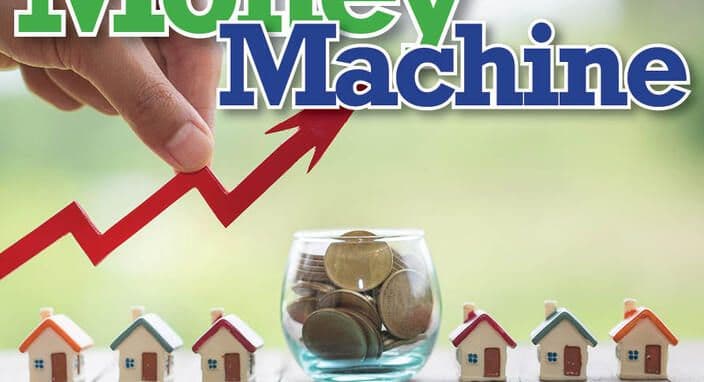
If you’ve taken my Money Machine seminars, read my articles or listened to me speak you’ll know that I am passionate about building a real estate investment portfolio that will provide a substantial passive income stream into retirement. Buy one property a year. Never amortize for more than 15 years. Never sell. Simple. And proven. It works.
For those of us who are residential landlords or for those aspiring to be there is a relatively new piece of legislation that we need to be aware of. It’s called the “Protecting Tenants and Strengthening Community Housing Act 2020”. Its effects are quite far-reaching. It makes amendments to the Residential Tenancies Act 2006, the Housing Services Act 2011, and The Building Code 1992 and it replaces the Ontario Mortgage and Housing Corporation Act.

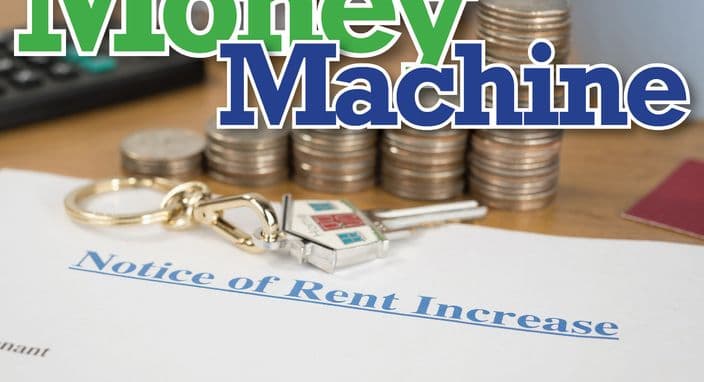
Over the past 5 years, property values have gone up. A lot! In fact, here in Niagara, we’re told prices are up a whopping 135%. And along with that upward movement on prices rental rates have skyrocketed as well. But that’s market rent.

In the last couple of issues of our newsletter we’ve looked at the process of evicting a tenant because either the current owner/landlord requires the premise for his own use or that of his immediate family, or he is selling the property and is giving notice to the tenant on behalf of the new owner who does. We saw that the process is initiated by serving the tenant with an N12 Eviction form. And we also saw that the process can be enforced in a timely manner by simultaneously submitting an L2 Application with the Board.
THE MONEY MACHINE - EVICTING A TENANT – PART II. Last issue we looked at the process involved in evicting a tenant. We saw that the Residential Tenancies Act provides means for a landlord to evict a tenant not only for objectionable behaviour (non-payment of rent, property damage, disturbance to others, etc.) but also because the landlord, either current or newly acquired, needs the unit for himself or for his immediate family.