Expert advice, market reports, and tips from the Niagara Region real estate professionals.

In your typical real estate transaction, a purchaser is required to deliver to the seller the balance of the purchase price after adjustments in the form of “a bank draft, certified cheque, or wire transfer”. Law offices have traditionally preferred certified cheques for several reasons. First, a certified cheque ensures the funds are available in the account it was issued from. This avoids the recipient bank’s requirement to hold large sums for several business days before they are cleared. A second reason why certified cheques have been the industry standard is that firms acting on opposite sides of a deal are often close to each other. This meant that on closing day, the lawyers would exchange certified funds and keys directly with the other law office.

As expected, moving into the late fall and early winter months, the market activity slows somewhat. People are simply less likely to buy a home in December and January as compared with April, May and June.

So, you are looking to purchase a second property! Congratulations! This is a great opportunity for you to expand your financial portfolio and ensure stability for the future

Over the years RE/MAX Garden City has had the privilege of meeting and working with a number of fine people. People who greatly enrich your life simply because of who they are. One of those very special individuals was a man named Tony Tripodi. Tony joined RE/MAX Garden City Realty back in 1987 and brought with him not only 18 years of experience in real estate but also the enormous respect he had earned in the industry. Over the next 33 years he proved to be not only an outstanding realtor and co-worker but also a dear friend to many.
Forgive me, but today I am going to rant! I think you all know I believe in real estate investment. That hasn’t changed. And the basic premise of the Money Machine seminar is developing an investment portfolio, largely composed of residential rented property that will provide you with a steady stream of passive income into retirement. That hasn’t changed. But I believe I have a responsibility to tell both sides of the story. The good as well as the bad. And while being a residential landlord has always had its challenges, in some ways it’s getting tougher still.
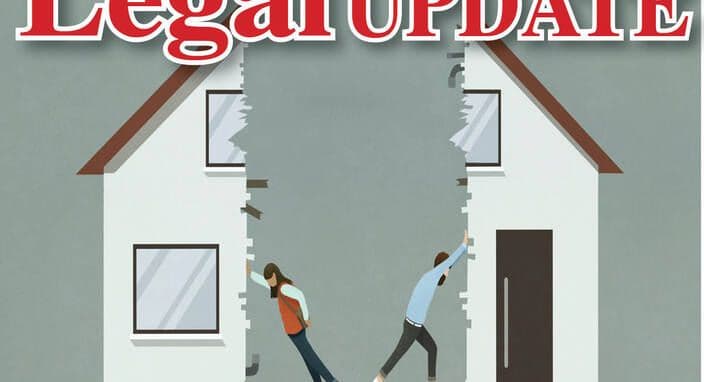
When a couple owns real estate together and have decided to sell their home and live separate and apart, a separation agreement will be necessary. This is true whether the couple is married, common-law, or are partners in a short-term relationship. This article focuses on the importance of understanding the equity in your home, considers what issues might be covered in an agreement, and explores when a party should seek legal assistance for the purpose of having a separation agreement prepared.

Moving on into the Fall, the market in Niagara continues to show remarkable strength. As one might expect, there is a slight dip in the number of sales recorded in August and September over the late spring and summer figures, but not much. In August, a total of 1003 sales were recorded across the region and in September the numbers had dropped slightly to 981. When compared to the record 1047 set in July, that represents a drop of 4.20% for August and a further drop of 2.19% in September, and that is in keeping with previous trends for this time of year.

Generally in our Money Machine seminars and related articles we concentrate on residential rentals. The reason is that for the novice investor it’s both easier to understand and easier to get into the residential investment market than it is commercial. Having said that, however, Commercial is a very valuable avenue for real estate investment and needs to be considered.

Did you know the biggest difference between getting your mortgage from a bank vs. a mortgage broker is that the bank only has access to their products, while I, your mortgage broker, have access to hundreds of different lending institutions and mortgage products to fit your unique needs?

I have been absent from writing the “Nuggets” portion of our monthly newsletter this year, but now that I am back to work it’s back on my work agenda plate again.

Whenever you purchase a property, you are essentially buying the land and improvements. That includes any trees or landscaping. It includes, of course, the bricks and mortar. But it also includes an intangible element. Something we call the “bundle of rights”. The right to occupy. The right to quiet enjoyment. And subject to the laws of the land, zoning etc, the right to remodel, to expand the footprint or demolish it for that matter.
Getting pre-approved can be a vital step to the home-buying process! But don’t confuse this with pre-qualification; you can get a pre-qualification through the My Mortgage Toolbox app to determine what you might qualify for. Pre-approval, on the other hand, means that a lender has stated (in writing) that you do qualify for a mortgage and what amount, based on your current income and credit history. A pre-approval usually specifies a term, interest rate and mortgage amount and is typically valid for a brief period of time, assuming various conditions are met.